Make your own sourdough starter the old way

Use only distilled water.
Flour must be unbleached
Yogurt, with active cultures or buttermilk

5-6 TB yogurt
A little water till consistency of cream

Pinch of caraway seed – helps with fermenting

Stir

Add flour (rye is best for fermenting) whole wheat is also good (½ rye ½ whole wheat is great a small sprinkle of rye or whole wheat spelt)

Use enough flour mix a bit at a time till consistency of a thick pancake batter.

Loose lid on top – place in warm place (at least 70 degrees) – stir every couple days.-for about a week.

Brownish water on top (called hooch) and mix in to starter real well, if starter too thin, add a tad of flour till it is the heavy pancake thickness again.

Every day Stir starter, ck to see if it needs more water or flour.

Day 4 should smell yeasty and sourdough-ish.

Day 5 mild yeasty smell and ready.

Stir in enough flour at end of starter ferment for storage, to make batter super dry and stir it really good. When dry as possible pour at least a ½ ot 1 c. flour on top, seal type lid on top, and store in frig.  Use once or twice a month if possible.
Why Did my Starter Grow Mold?

Sterilize everything well before starting
Mold in air
Mold in wheat flour

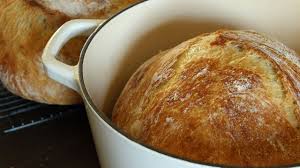
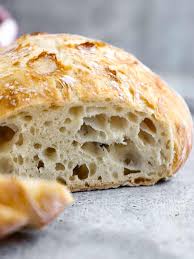
Using Starter and bread making.

Add water and work it into the mixture until thick pancake batter consistency again.
Leave overnight
For 1 loaf round Bread
1C Milk
2Tb Butter
1 ½ Tsps. salt
2 Tb honey
3 ½ cups flour
1 Cup Sourdough starter
You may need to add 2-3 Tb of water depending on the type of flour that you use.
2 rise periods
Scar bread with razor blade
Bake at 400 degrees for about 40 min.

Emergancy Flatbread


This emergency bread is a life-saver in its simplicity. You need only three ingredients (two if you don’t count water as an ingredient. For our batch, you will need:

2 cups of flour (any type)
1/2 teaspoon of salt
1/2 cup of water

Instructions:

Combine Flour & Salt: Reserve a small amount of the flour for later use. Combine the salt and most of the flour in a mixing bowl.

Add Water: Add the water to the flour, stirring until the mixture becomes crumbly or begins to clump together. Start with the specified amount of water and add more as needed. Different flours like whole wheat, rye, sorghum, barley, or stone ground may require more water to get the same dough ball consistency and elasticity. I use a spatula to start the process of mixing the ingredients.

Knead the Dough: Knead the dough with your hands against the bottom of the bowl until it feels smooth and elastic (3-5 minutes). Add more flour if the dough feels sticky. Add more water by the Tablespoon if you can’t get it to clump together.

Let It Rest: Cover the dough and let it rest for 15-30 minutes to allow the gluten to relax.

Heat the Pan: Start heating your flat cast iron pan over your heat source. My preference is a flat cast iron skillet, but any solid cooking surface will do. Traditionally, people have used anything from shovels to rocks that can withstand the heat of an open fire.

Shape the Dough: Divide the dough into walnut-sized lumps or slightly smaller pieces. That would be a ball that is approximately 2 inches round or less. Roll the balls between your hands to make them round and eliminate creases. Squeezing them slightly will help pull the dough together. You should get 8-10 dough pieces with two cups of flour.

Sprinkle a pinch of the flour you previously set aside on a flat surface (countertop or large wooden cutting board) and press one lump of dough into a flat circle using your hands.  Shape the dough into a thin circle by pressing and stretching with your hands. Aim for it to be as thin as possible without tearing the dough. If you have a rolling pin or dowel, you could use that. If you have a tortilla press, you could use that. You can even just mash it and press it as flat as you can between two flat surfaces. The thinness allows you to cook it fast and all the way through.

Cook the Flatbread: Check the temperature of your pan by dropping a small amount of water on it. It should sizzle and evaporate quickly. You want the pan to be as hot as possible to facilitate the swift cooking.

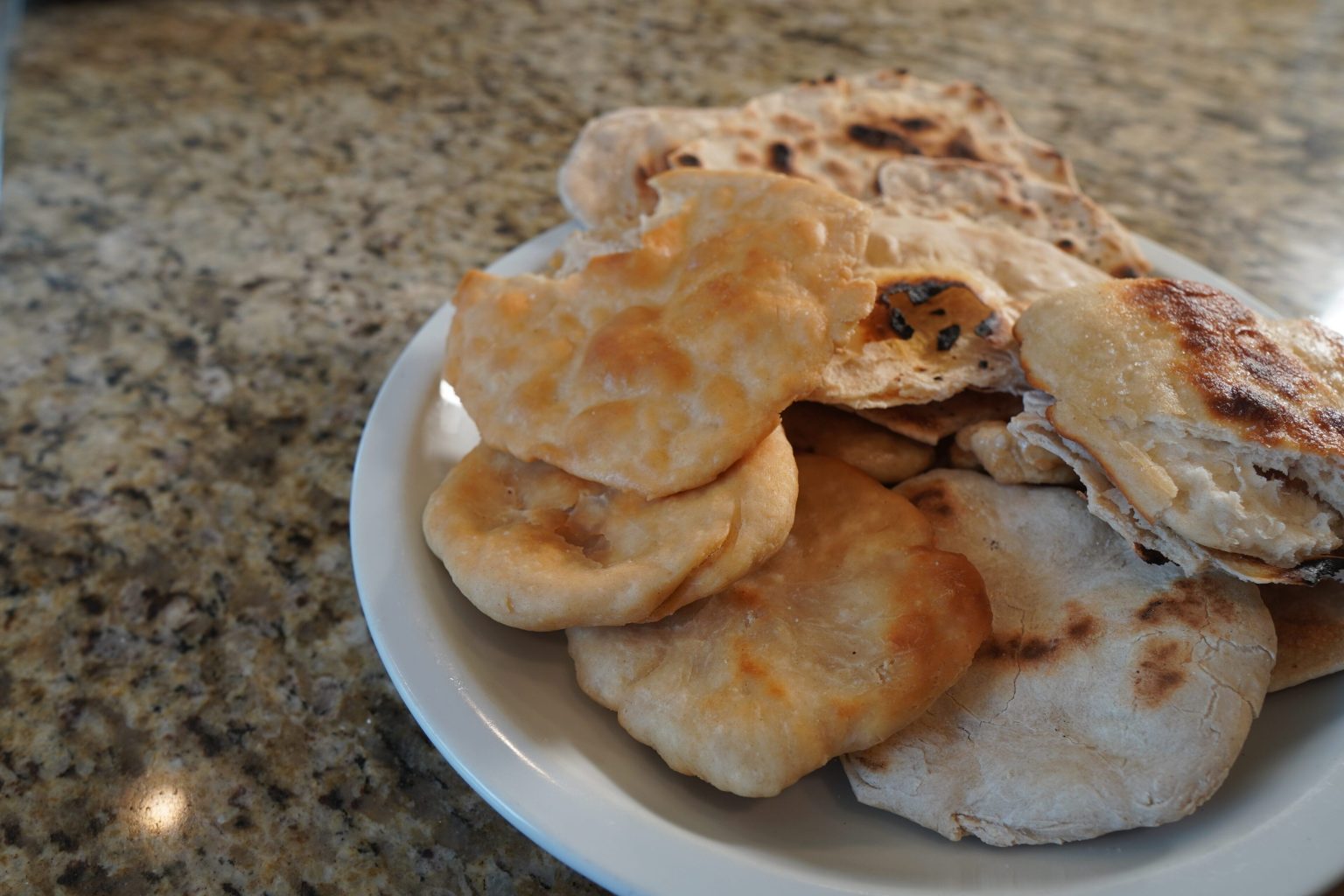
Once the pan is hot enough, transfer the flattened dough onto it. Cook the flatbread, keeping a close eye on it. Flip it when the edges start to curl up or appear dry. You can use a spatula, fork, tongs, or even quick fingers to flip it. Continue cooking until the bread browns slightly on each side. Undercooking it will just give you a doughier textured bread. Overcooking it will make it drier and crispier. A little burn on it actually imparts a little flavor to it.

Serve Warm: Once cooked, transfer the flatbread to a plate covered with a hand towel or cloth napkin to keep it warm and soft. Repeat the process with the remaining dough pieces.

Variations: If you add just one ingredient—a handful of herbs, some wild yeast, or seeds you gathered—or even change the cooking method by frying the dough in oil or dropping it into salted boiling water, you have a completely different bread. The variations of ingredients and cooking methods are limitless.

Rising Version: You need an agent, either yeast pulled from the air as we did in another video or a combination of leavening agents like baking soda and an acid. Here’s the same recipe, but I added a  1/2 teaspoon of baking powder, a 1/2 teaspoon of lemon juice, and then the water. I could substitute the same amount of vinegar for the lemon juice. That small amount of lemon juice does impart just a hint of flavor to the bread. If that bothers you, you could use a different acid, like the equivalent amount of vinegar. I can set the dough aside for about 20 minutes, and when I cook it, the bread will have a little rise. It won’t be as flat.

Fry Bread Version: When it comes to cooking variations for different styles of bread, this basic recipe isn’t too different from traditional fried bread. Consider adding a leavening agent, lightly salting, or dusting the hot fried bread with cinnamon and sugar. Replace the flat cast iron pan with a frying pan. Use any available cooking oil, butter, or tallow to fry the bread instead of dry-cooking it. Here, I use bacon grease. Adjust the heat as needed to prevent burning. Fry until the bread is golden on the outside.

Boiled Version: If you divide the 2-inch round pieces into quarters, you can drop each into a boiling pot of salted water for about two minutes. When you take them out, lightly salt them and eat them as they are, or put them on your hot, flat cooking surface to brown them slightly. Cooking them in this way will change the gluten structures and result in your emergency bread tasting more like a pretzel or bagel.

Changing it with any of these variations or variations of your own will keep you from suffering food fatigue if you ever have to survive solely on these emergency breads. These recipes will give you a baseline to which you can add your own unique twists and additions. Consider using your finished flatbread as you do other breads. Eat it alone or use it as a carrier for other foods: dip it in hummus, put meat in it like a taco, spread peanut butter on it, or whatever else you can imagine. Remember, knowing how to make this emergency flatbread is a valuable survival skill, especially when traditional baking methods are unavailable.

Published
Categorized as Breads

Pan not yeast fry bread

Servings – 10-20 flatbreads (depends on the size & shape of the skillet flatbread that you create).

Ingredients

  • 2 1/2 Cups – All Purpose Flour
  • 1 Teaspoon – Salt
  • 1 Teaspoon – White Granulated Sugar
  • 1 Teaspoon – Baking Powder
  • 2 Teaspoons – Italian Seasoning (dried spices)
  • 1 Cup – Milk
  • 1/4 Cup – Unsalted Butter (softened)  – FYI – 1/4 cup equals 4 tablespoons

Tips:

  • Optional – If you don’t like or you are out of Italian seasoning, you can add a tablespoon of very finely diced & fried onions or minced & fried garlic. This takes a little more time than adding dried herbs (because you need to dice/mince & fry the onions/garlic) but onion or garlic flatbread is delicious.
  • One of the commenters below (thanks Lisa!!) made a delicious version of this bread with rosemary & garlic.
  • No yeast flatbread = a quick flatbread. Why? Because with a no yeast flatbread recipe, you do not have to wait for the dough to rise. Yeast flatbreads can sometimes require 1+ hours for rising (and this makes yeast flatbreads more time consuming). No yeast flatbreads are easier to make… and certainly a lot quicker to make than most yeast breads.
  • Make sure to mix the dry ingredients before you add the wet ingredients (e.g. milk). This ensures that there are no “pockets” of unmixed baking powder.

Instructions

  • Add the dry ingredients (e.g. flour, salt, sugar, baking powder & herbs) to a large mixing bowl. Mix dry ingredients together. This helps to spread out the baking powder and prevents small pockets of baking powder being found in the finished bread.
  • Soften butter in a microwave.
  • Add wet ingredients (e.g. milk and melted butter) to the mixing bowl. Stir thoroughly with a large spoon.
  • Use your hands to knead the dough together for 1 or 2 minutes in order to create a nice ball of dough.
  • Sprinkle some flour on a cutting board in order to prevent the dough sticking to the cutting board (when you roll out the dough).
  • Place the dough of the cutting board.
  • Sprinkle a small amount of flour on top of the dough (in order to prevent the dough sticking to the rolling pin).
  • Use a rolling pin to roll the dough flat. The dough should be no more than 1/8 inch high.
  • Use a large cookie cutter (or small cake ring) to create circular flatbreads. Or cut the dough with a knife diagonally & vertically (in a tic-tac-toe fashion) in order to create square flatbreads. Use tips below for more information on shaping the skillet flatbread.
  • Add 1 or 2 tablespoons of oil or butter to a frying pan.
  • Heat the frying pan with low/medium heat (halfway between the low and medium setting on your range dial).
  • Place the flatbread dough in to the frying pan. The amount of flatbread that can fit in your frying pan depends on the size of the frying pan & flatbreads.
  • Flip all of the flatbreads in the pan every minute in order to prevent burning. Remove the flatbreads from the frying pan when golden brown on both sides. It should take only 2-4 minutes to fry each batch of flatbread (so you need to watch the frying pan carefully… don’t step away from the pan or they will burn).
  • Add another 1 or 2 tablespoons of oil or butter to the frying pan when you fry a new batch of flatbreads.
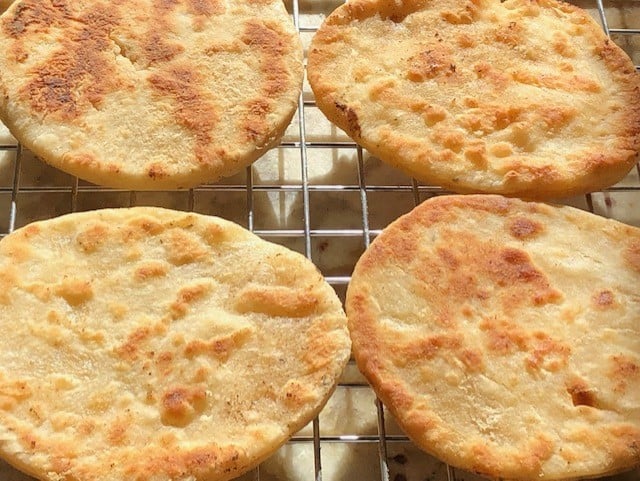
  • Place the skillet flatbread on a wire cooling rack.
  • Serve while still warm.
Published
Categorized as Breads

Emergency Flatbread

CREATOR: gd-jpeg v1.0 (using IJG JPEG v62), quality = 82

Emergency Flatbread: Simple Recipe for Any Crisis

Just three ingredients (two if you don’t count water) and hundreds of variations that could save your life.
In this post, we’ll show you how to make emergency bread. Unleavened bread, made with just flour, salt, and water, is incredibly simple and essential in times of crisis. This versatile recipe can be cooked over open flames or portable stoves, providing crucial sustenance when traditional baking isn’t possible. I’ll take you step-by-step through the process anyone can do, but stick around to the end, and I’ll tell you about countless variations that can make each batch unique.
What You Need:
This emergency bread is a life-saver in its simplicity. You need only three ingredients (two if you don’t count water as an ingredient. For our batch, you will need:
2 cups of flour (any type)
1/2 teaspoon of salt
1/2 cup of water
Instructions:
Combine Flour & Salt: Reserve a small amount of the flour for later use. Combine the salt and most of the flour in a mixing bowl.
Add Water: Add the water to the flour, stirring until the mixture becomes crumbly or begins to clump together. Start with the specified amount of water and add more as needed. Different flours like whole wheat, rye, sorghum, barley, or stone ground may require more water to get the same dough ball consistency and elasticity. I use a spatula to start the process of mixing the ingredients.
Knead the Dough: Knead the dough with your hands against the bottom of the bowl until it feels smooth and elastic (3-5 minutes). Add more flour if the dough feels sticky. Add more water by the Tablespoon if you can’t get it to clump together.
Let It Rest: Cover the dough and let it rest for 15-30 minutes to allow the gluten to relax.
Heat the Pan: Start heating your flat cast iron pan over your heat source. My preference is a flat cast iron skillet, but any solid cooking surface will do. Traditionally, people have used anything from shovels to rocks that can withstand the heat of an open fire.
Shape the Dough: Divide the dough into walnut-sized lumps or slightly smaller pieces. That would be a ball that is approximately 2 inches round or less. Roll the balls between your hands to make them round and eliminate creases. Squeezing them slightly will help pull the dough together. You should get 8-10 dough pieces with two cups of flour.
Sprinkle a pinch of the flour you previously set aside on a flat surface (countertop or large wooden cutting board) and press one lump of dough into a flat circle using your hands. Shape the dough into a thin circle by pressing and stretching with your hands. Aim for it to be as thin as possible without tearing the dough. If you have a rolling pin or dowel, you could use that. If you have a tortilla press, you could use that. You can even just mash it and press it as flat as you can between two flat surfaces. The thinness allows you to cook it fast and all the way through.
Cook the Flatbread: Check the temperature of your pan by dropping a small amount of water on it. It should sizzle and evaporate quickly. You want the pan to be as hot as possible to facilitate the swift cooking.
Once the pan is hot enough, transfer the flattened dough onto it. Cook the flatbread, keeping a close eye on it. Flip it when the edges start to curl up or appear dry. You can use a spatula, fork, tongs, or even quick fingers to flip it. Continue cooking until the bread browns slightly on each side. Undercooking it will just give you a doughier textured bread. Overcooking it will make it drier and crispier. A little burn on it actually imparts a little flavor to it.
Serve Warm: Once cooked, transfer the flatbread to a plate covered with a hand towel or cloth napkin to keep it warm and soft. Repeat the process with the remaining dough pieces.
Variations: If you add just one ingredient—a handful of herbs, some wild yeast, or seeds you gathered—or even change the cooking method by frying the dough in oil or dropping it into salted boiling water, you have a completely different bread. The variations of ingredients and cooking methods are limitless.
Rising Version: You need an agent, either yeast pulled from the air as we did in another video or a combination of leavening agents like baking soda and an acid. Here’s the same recipe, but I added a 1/2 teaspoon of baking powder, a 1/2 teaspoon of lemon juice, and then the water. I could substitute the same amount of vinegar for the lemon juice. That small amount of lemon juice does impart just a hint of flavor to the bread. If that bothers you, you could use a different acid, like the equivalent amount of vinegar. I can set the dough aside for about 20 minutes, and when I cook it, the bread will have a little rise. It won’t be as flat.
Nutritious Version: Add partially ground seeds to the dough. Note that seeds may affect the texture of the final bread. Many types of seeds and grains can be foraged from nature or your garden: amaranth, Chia, Buckwheat, Sorghum, Barley, Sunflower Seeds, or Millet. Here, I am partially grinding up some Buckwheat and Chia seeds and simply working them into the dough. I can cook it in any of the same ways to get a little more flavor and nutrition from the bread.
Fry Bread Version: When it comes to cooking variations for different styles of bread, this basic recipe isn’t too different from traditional fried bread. Consider adding a leavening agent, lightly salting, or dusting the hot fried bread with cinnamon and sugar. Replace the flat cast iron pan with a frying pan. Use any available cooking oil, butter, or tallow to fry the bread instead of dry-cooking it. Here, I use bacon grease. Adjust the heat as needed to prevent burning. Fry until the bread is golden on the outside.
Boiled Version: If you divide the 2-inch round pieces into quarters, you can drop each into a boiling pot of salted water for about two minutes. When you take them out, lightly salt them and eat them as they are, or put them on your hot, flat cooking surface to brown them slightly. Cooking them in this way will change the gluten structures and result in your emergency bread tasting more like a pretzel or bagel.
Changing it with any of these variations or variations of your own will keep you from suffering food fatigue if you ever have to survive solely on these emergency breads. These recipes will give you a baseline to which you can add your own unique twists and additions. Consider using your finished flatbread as you do other breads. Eat it alone or use it as a carrier for other foods: dip it in hummus, put meat in it like a taco, spread peanut butter on it, or whatever else you can imagine. Remember, knowing how to make this emergency flatbread is a valuable survival skill, especially when traditional baking methods are unavailable.
As always, stay safe out there.

Published
Categorized as Breads

Good Sandwich Bread Farmers Table

Yields 2 loaves
Amanda Paladini- Welcome Grove Homestead, shared by Jess Sowards – The Farmer’s Table

Ingredients
6 1/2 to 8 1/2 cups unbleached all-purpose flour
2 1/2 teaspoons salt
1 1/2 tablespoons instant yeast
1/4 cup sugar or honey
2 3/4 cups very warm water
1/4 cup neutral-flavored oil
Directions
In the bowl of an electric stand mixer fitted with the dough hook (or in a large bowl, if making the dough by hand), combine THREE cups of the flour, salt, yeast and sugar.
Add the water and oil and mix.
Let the batter rest for 10 minutes. The yeast should be bubbly.
With the mixer running (or stirring by hand). gradually add another 3 to 4 cups of flour (I’ve had to add up to 5), until the dough comes together in a cohesive ball that clears the bottom and sides of the bowl.
Knead for about 2-4 minutes until the dough is smooth and supple.
Lightly grease a large bowl. Transfer the dough to the prepared bowl, cover with greased plastic wrap or a light kitchen towel, and let rise until doubled, about an hour or so, depending on the warmth of your kitchen.
Lightly punch down the dough and divide it into two equal pieces
Grease two 8 1/2-inch by 4 1/2-inch bread pans.
Press each piece of dough into a thick rectangle about 8-inches long; roll it up, pressing on the seams, and pinching the final seam together.
Place the dough loaves into the prepared pans.
Cover with lightly greased plastic wrap or thin kitchen towels and let rise until doubled and the dough has risen about 1-inch above the top rim of the pan, about an hour or so, depending on the warmth of your kitchen.
While the dough rises, preheat the oven to 350 degrees F.
Bake the bread for 30-32 minutes until golden and baked through.
Remove from the oven and turn the bread out onto a wire rack. Immediately brush the tops of the loaves with melted butter (or use a stick of butter, peeling the paper back and rubbing it on the top of the hot bread).
Let the bread cool completely.
The bread can be stored at room temperature, covered in a bread bag, for a couple days, or frozen for up to a month or so.

Published
Categorized as Breads

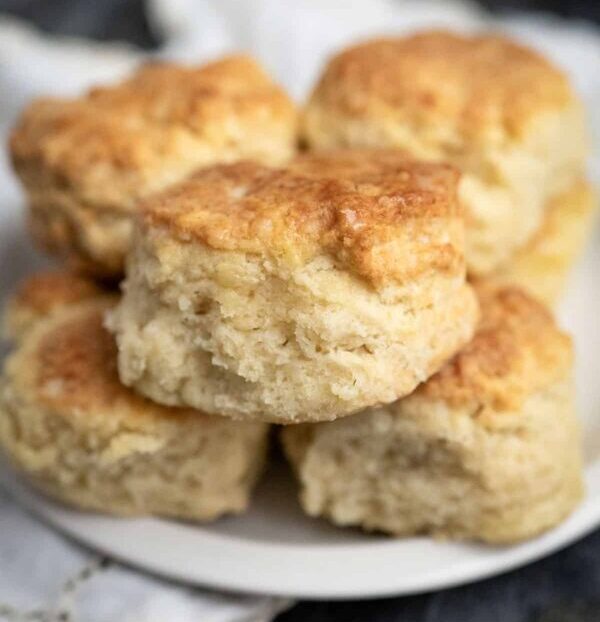
Simple Southern Biscuits Farmers Table


by Jess Sowards- The Farmer’s Table

8 Biscuits (fills on 12 inch cast iron pan)

Ingredients
2 ½ C. All-Purpose Flour
2 Tablespoons Baking Powder
1 teaspoon salt
½ C. (1 Stick) Butter, cubed and cold
1 C. + 2T. Buttermilk (OR 1 C. + 1T. milk with 1T lemon juice added)
2 T. Butter, melted, to pour over top before baking
Directions
Preheat oven to 425°. Grease pan (I use a 12 inch cast iron pan)

Mix dry ingredients (flour, baking powder and salt) in medium mixing bowl.

Cut butter into dry mix until crumbly.

Mix buttermilk into crumbly mixture, mixing until incorporated.

Flour work surface and turn the dough out. Press until ¾ inch thick rectangle.
Fold the dough onto inself and press back to ¾ inch thick rectangle. Repeat this step again.

Cut into 3 inch biscuits with cutter or mason jar lid.

Place biscuits close together in pan.

Drizzle melted butter on top of biscuits.

Bake for 18-20 minutes until golden on top.

Enjoy!

Published
Categorized as Breads

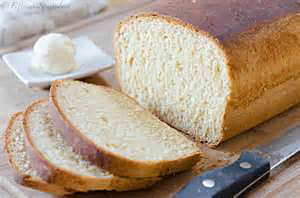
White Bread From Preppy Kitchen

Notes
Do not use hot melted butter. Melt the butter, then let it cool slightly, about 10 minutes. When added to the yeast mixture, it should be less than 105°F, or it could kill the yeast. I like to melt the butter first, then measure out all of my ingredients and bloom the yeast so it cools during that time.
For a softer loaf: You can replace up to 1 cup of water with warm milk.
Sugar swap: You can use honey in place of the granulated sugar to feed the yeast.
To make 1 loaf: You can halve the recipe to make one loaf instead of two.

Cook Time30minutes minutes
Rise Time1hour hour 10minutes minutes
Servings2 loaves
Author: John Kanell – Preppy Kitchen
Equipment
2 9-inch loaf pans
Ingredients
2 cups warm water (105 to 110°F) (480ml)
2 tablespoons granulated sugar
2 (0.25-ounce/7g) packets active dry yeast
6 cups all-purpose flour (720g)
4 tablespoons unsalted butter melted (56g)
2 teaspoons salt
Instructions
In the bowl of a stand mixer fitted with the dough hook attachment, stir together the warm water, sugar, and yeast until combined. Let it stand for 5 minutes, or until very foamy.
To the same bowl with the yeast mixture, add the flour, butter and salt. Mix on low speed for 1 minute or until the dough comes together in a shaggy ball and pulls away from the sides of the bowl. (If any small bits of dough remain on the sides of the bowl, stop the mixer and scrape them into the dough ball.)
Increase the mixer speed to medium-low and continue to knead for 5 to 7 minutes, until the dough is smooth and springs back quickly when pressed with a finger. The dough should feel moist, but not sticky.
Place the dough in a lightly greased bowl. Flip the dough over once so that the top is also greased. Cover it with plastic wrap and let it rise in a warm, draft-free spot (75°F) for 40 to 50 minutes, until the dough is nearly doubled in size and springs back slowly when pressed with a wet fingertip.
Meanwhile, grease two 9×5-inch loaf pans with butter or baking spray.
Punch down the dough and turn it onto a very lightly floured surface. Divide it into 2 equal pieces (630g each).
Form each piece into an 8×12-inch rectangle. Starting with a short end, roll each piece into a tight, log shape. Pinch the seams along the sides tightly together and gently tuck them under the loaf. Use a bench scraper to pick up the loaves and place them seam side down into the prepared loaf pans. Loosely cover both pans with plastic wrap sprayed with nonstick spray and let them rise again for 25 to 35 minutes, or until the height of the dough rises just above the top rim of the pan.
While the dough is rising in the pans, preheat the oven to 350°F. Once the loaves have finished their second rise, brush the top of each loaf with additional melted butter if desired.
Bake for 30 – 35 minutes until the tops are golden brown. Let them cool for a few minutes in the pan, then tip them onto a wire cooling rack to cool completely.
Nutrition
Calories: 1635kcal | Carbohydrates: 301g | Protein: 42g | Fat: 27g | Saturated Fat: 15g | Polyunsaturated Fat: 2g | Monounsaturated Fat: 7g | Trans Fat: 1g | Cholesterol: 60mg | Sodium: 2352mg | Potassium: 476mg | Fiber: 12g | Sugar: 13g | Vitamin A: 700IU | Vitamin C: 0.02mg | Calcium: 74mg | Iron: 18mg

Published
Categorized as Breads

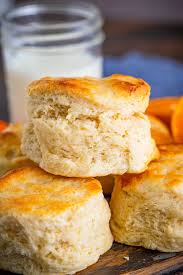
Dad’s Buttery Biscuits

Serves: 12

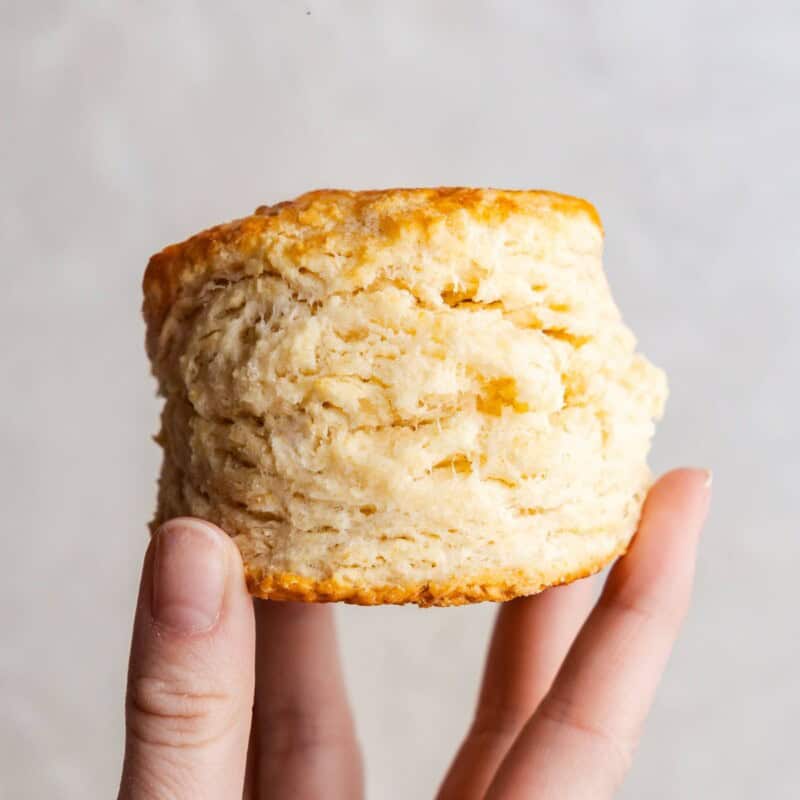
Fluffy, Buttery, flakey biscuits for everyday.

Ingredients:

2 cups plain flour – sifted
1 Tb baking powder
½ tsp salt
½ tsp cream of tartar
1 ½ – Tb honey or sugar
1 stick butter (1/2 cup) cold and cut into ½ inch cubes. You can use shortening or a mix of butter and shortening.
⅔ – ½ cup whole milk
Directions:
Preheat oven to 375 F. to 400 F. I use 375 F. for my oven.

You can use fork method or place dry ingredients in a food processor and whiz to combine.

Add butter and pulse or cut in with pastry cutter, till the butter looks pea size.

Dump into a mixing bowl if using processer, and add the milk and honey and stir until it comes together by hand.

Place on a lightly floured surface (I use a sheet of parchment paper for easy clean up). Knead several times to work the gluten then pat the dough with your fingers to about ¾ inch high. You can go lower and get more biscuits but they won’t be as high.

Gently cut out with a biscuit cutter, a tin can or a glass. Try not to use twisting or sawing motion as it will smash edges and affect the rise of the biscuit. Place biscuits in baking pan flat side up for a more even rising.

Let the biscuits rest a few minutes or up to ½ hr. before placing in the oven if you have time. The rise will increase.

You may brush the tops with melted butter or milk before baking but I always brush with butter right after they come out of the oven.

Bake for 10 minutes or until golden brown.

Published
Categorized as Breads

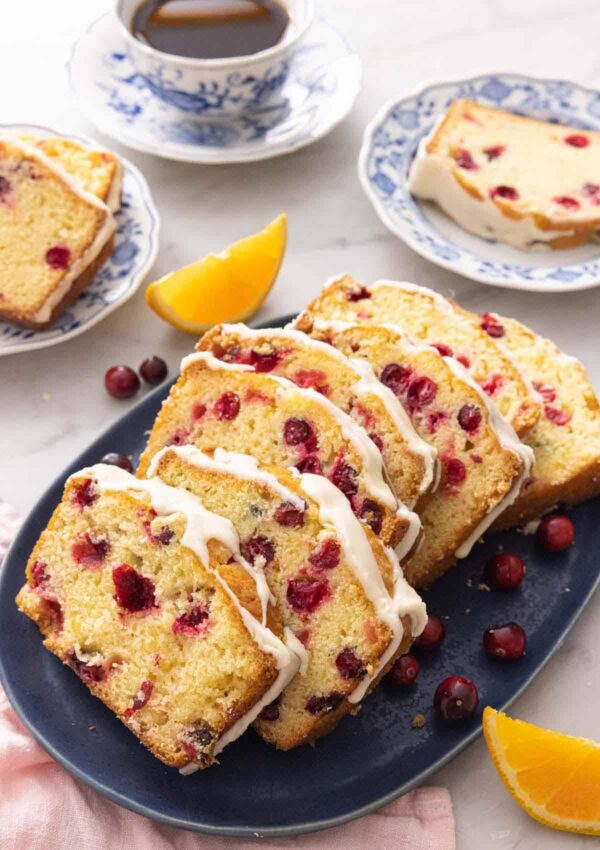
Cranberry Orange Bread

Pro Tips for Making This Recipe

Don’t use an electric mixer, or you could over-mix the batter, resulting in a dense loaf or large holes in the crumb. Just use a spatula and mix until everything is just combined.
It is much easier to zest the orange before juicing.
Bring your eggs and milk to room temperature so they incorporate fully into the batter.
Measure your flour correctly! Adding too much flour will lead to the cranberry bread ending up dense. The best and easiest way to measure flour is by using a scale. If you don’t have one, then fluff your flour with a spoon, sprinkle it into your measuring cup, and use a knife to level it off.
For a smooth glaze, sift the powdered sugar before whisking it together.
If the top of the loaf is browning too quickly, cover the pan with some tin foil.
To get more juice out of an orange, roll it under your palm on the countertop to loosen the juices. Use 9×5 inch loaf pan

Cranberry Orange Bread

Servings 8 AuthorJohn Kanell

Ingredients
For the Cranberry-Orange Bread
2 cups all-purpose flour (240g)
1 cup granulated sugar (200g)
1¼ teaspoons baking powder
½ teaspoon salt
½ cup milk (120mL)
½ cup vegetable oil (120mL)
zest of 1 orange
2 tablespoons orange juice (about 1/2 orange)
1 large egg
2 teaspoons vanilla extract
1 cup fresh or frozen cranberries

For the Orange Glaze
1½ cups powdered sugar sifted
3 to 4 tablespoons orange juice
¼ teaspoon vanilla extract
orange zest
Instructions
1. Preheat the oven to 350F. Butter a 9×5-inch loaf pan or spray with baking spray.
2. In a large mixing bowl, whisk together flour, sugar, baking powder, and salt. In another large bowl, whisk together milk, oil, orange zest and juice, egg, and vanilla until well combined.
3. Add the milk mixture to the flour mixture and stir just until combined. Fold in the cranberries. Pour the batter into the prepared pan.
4. Bake for 55 minutes, or until a toothpick inserted into the center comes out with a few moist crumbs. Let the bread cool in the pan on a wire rack for 20 minutes. Carefully remove and let cool completely on the wire rack.
For the Glaze:
1. In a small bowl, whisk together sugar, orange juice, and vanilla until smooth and desired consistency. Drizzle over the cooled bread. Garnish with orange zest before slicing, if desired.

Nutrition
Calories: 452kcal | Carbohydrates: 75g | Protein: 5g | Fat: 15g | Saturated Fat: 3g | Polyunsaturated Fat: 8g | Monounsaturated Fat: 3g | Trans Fat: 1g | Cholesterol: 25mg | Sodium: 229mg | Potassium: 100mg | Fiber: 2g | Sugar: 49g | Vitamin A: 94IU | Vitamin C: 9mg | Calcium: 67mg | Iron: 2mg
*Nutrition Disclaimer
Have you Tried this

Published
Categorized as Breads

Favorite Bakery Bread

This is my go to bread recipe now.

1Cp tepid water
3 tsp yeast
3 TB Sugar
3TB oil
1½ tsp Salt
3 Cups Flour
Mix tepid water and yeast and let it proof.
Mix salt and flour in mixer very well.
Mix in the sugar and oil.
Mix in the yeast and water.

Mix for about 3 minutes or more before testing the texture.
Mix time will be a total of 7-10 minutes.
Only add water a tablespoon at a time if you feel it is too dry,
the same with flour if you feel dough is to wet. Mix for another
3 min. before you add anything more. If all looks good, mix for
another 7min. or less if you have had to add ingredients, or a
total of no more that 10 minutes all together.

Meanwhile boil water and place into a pan inside unheated oven when dough
is almost ready. For safty sake, please place you hot water pan in oven then add the
water.
Place dough in a greased bowl and cover with cotton towel or
cheese cloth. Place bowl in unheated oven on top rack, to rise.
About 1 hour should be enough for the first rise.

Empty out the water and put more water on to boil.
Form and fold dough into you well-greased bread pan.
Place the water into the pan again.
Place dough onto the top rack in the unheated oven to rise
Until it is about 2 knuckles higher than the pan. Takes about 20-30
minutes.
With the water still in the oven, preheat oven to 350 °.
Bake bread 30-40 minutes until bread reaches 198°-200°.
Check the bottom of the bread loaf to see if it is browned enough, if so
Turn it out on towel or rack and let cool.

Published
Categorized as Breads