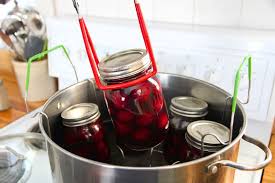
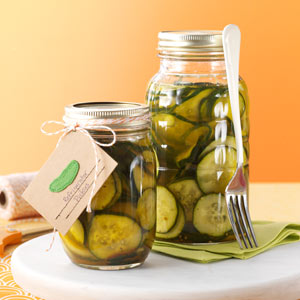
Pickled Red Onions For Canning

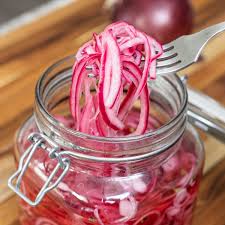
Pickled Red Onions

3 pounds red onions
2-3 tbsp pickling salt
1/3 cup sugar (or to taste)
4 cups vinegar at least 5% acidity

Ball Pickle Crisp (optional) For canning, use 1/8 teaspoon per pint jar \ 1/4 teaspoon per quart jar, adding it directly to the jar before filling with vegetable  and brine; more isn’t better, as too much can cause a metallic taste, so measure carefully for crisp pickles.

How to Use Pickle Crisp

Measure: Add 1/8 teaspoon of Pickle Crisp to each pint jar. Pack: Fill the jar with your prepared vegetable and pickling liquid, leaving headspace.

Optional: 1 clove garlic crushed, black peppercorns, mustard seeds, bay leaf, 12  sprigs of thyme, 2 Tb. per pint jar of pickling spice. use a cheese cloth bag and simmer in brine.

  1. Prepare Jars & Lids: Sterilize your canning jars and lids, and have a large pot for the water bath ready.
  2. Make Brine: In a saucepan, combine vinegar, water, sugar, and salt; heat until sugar and salt dissolve.
  3. Infuse Flavors: Place in a cheese cloth bag –  garlic and spices (peppercorns, etc.) to the brine and simmer for 5 minutes to infuse.
  4. Cool brine: Cool brine down a little, and fill packed jars. Pack into jars leaving headspace, cover with brine, and then process in a boiling water bath for about 15-20minutes, sealing jars for pantry storage.

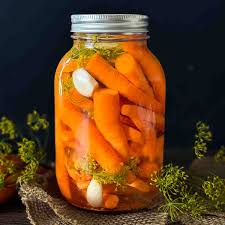
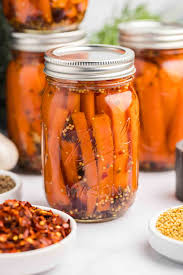
Refrigerator Pickled Dilly Carrots

For a versatile and flavorful result, a classic quick-pickled dill carrot recipe offers the best balance of tangy flavor and satisfying crunch, perfect for snacking or adding to salads and sandwiches.

This recipe uses a simple, reliable brine and a short refrigeration period, making it easy to prepare.

Classic Pickled Dilly Carrots (Quick Pickle Method)

This recipe is for

#2 Recipe:

For a versatile and flavorful result, a classic quick-pickled dill carrot recipe offers the best balance of tangy flavor and satisfying crunch, perfect for snacking or adding to salads and sandwiches.

This recipe uses a simple, reliable brine and a short refrigeration period, making it easy to prepare.

Classic Pickled Dilly Carrots (Quick Pickle Method)

This recipe is for refrigerator pickles and should be stored in the fridge, where they will keep for a few weeks. The flavors improve significantly after at least 48 hours.

Ingredients

Carrots: 1 pound, peeled and cut into sticks or slices to fit your jar

Water: 1 cup

White Vinegar (5% acidity): 1 cup

Pickling Salt (or Kosher/Sea Salt): 1 tablespoon

Garlic: 2 cloves, smashed or halved

Dill seeds: 1 teaspoon (or a fresh dill head)

Black Peppercorns: 1/2 teaspoon

Optional: 1 tablespoon white sugar or honey to balance the vinegar

Instructions

Prepare the Carrots and Jars: Wash and peel the carrots. Cut them into uniform sticks or slices that will fit vertically into a clean glass jar(s) while leaving about 1/2 inch of headspace. Pack the carrots tightly into the jar(s). Add the garlic, dill seeds, and peppercorns to the jar(s).

Make the Brine: In a small saucepan, combine the water, vinegar, and salt (and sugar/honey if using). Bring the mixture to a boil, stirring until the salt and sugar are fully dissolved. Remove the brine from the heat.

Combine and Cool: Pour the hot brine over the carrots in the jar, ensuring they are fully submerged, leaving about 1/2 inch of headspace at the top. Gently tap the jar to remove air bubbles.

Seal and Refrigerate: Allow the jar to cool to room temperature (about 1 hour), then seal it tightly with a lid. Place the jar in the refrigerator.

Wait: Let the carrots pickle for at least 48 hours before eating; the flavor is best after 2-3 days. They can be stored in the refrigerator for up to a month.

Variations

You can easily customize the flavor profile by changing the spices or adding other ingredients:

Spicy Mexican Style: Add a sliced jalapeño, dried Mexican oregano, and a bay leaf to the jar for a zesty flavor profile often found in taquerias.

Asian Style: Use rice wine vinegar and add a slice of fresh ginger, minced garlic, a whole star anise, and red pepper flakes for a Vietnamese-style pickle, great for banh mi.

Sweet & Tangy: Increase the sugar to 2 tablespoons or more and consider using apple cider vinegar for a sweeter, bread-and-butter-style pickle.

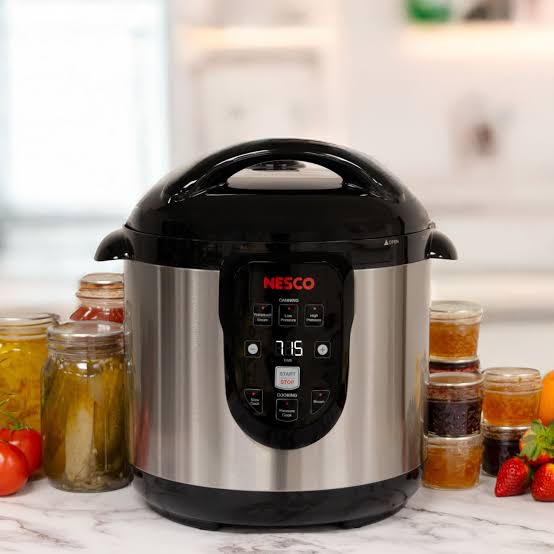
pickles and should be stored in the fridge, where they will keep for a few weeks. The flavors improve significantly after at least 48 hours.

Ingredients

Carrots: 1 pound, peeled and cut into sticks or slices to fit your jar

Water: 1 cup

White Vinegar (5% acidity): 1 cup

Pickling Salt (or Kosher/Sea Salt): 1 tablespoon

Garlic: 2 cloves, smashed or halved

Dill seeds: 1 teaspoon (or a fresh dill head)

Black Peppercorns: 1/2 teaspoon

Optional: 1 tablespoon white sugar or honey to balance the vinegar

Instructions

Prepare the Carrots and Jars: Wash and peel the carrots. Cut them into uniform sticks or slices that will fit vertically into a clean glass jar(s) while leaving about 1/2 inch of headspace. Pack the carrots tightly into the jar(s). Add the garlic, dill seeds, and peppercorns to the jar(s).

Make the Brine: In a small saucepan, combine the water, vinegar, and salt (and sugar/honey if using). Bring the mixture to a boil, stirring until the salt and sugar are fully dissolved. Remove the brine from the heat.

Combine and Cool: Pour the hot brine over the carrots in the jar, ensuring they are fully submerged, leaving about 1/2 inch of headspace at the top. Gently tap the jar to remove air bubbles.

Seal and Refrigerate: Allow the jar to cool to room temperature (about 1 hour), then seal it tightly with a lid. Place the jar in the refrigerator.

Wait: Let the carrots pickle for at least 48 hours before eating; the flavor is best after 2-3 days. They can be stored in the refrigerator for up to a month.

Variations

You can easily customize the flavor profile by changing the spices or adding other ingredients:

Spicy Mexican Style: Add a sliced jalapeño, dried Mexican oregano, and a bay leaf to the jar for a zesty flavor profile often found in taquerias.

Asian Style: Use rice wine vinegar and add a slice of fresh ginger, minced garlic, a whole star anise, and red pepper flakes for a Vietnamese-style pickle, great for banh mi.

Sweet & Tangy: Increase the sugar to 2 tablespoons or more and consider using apple cider vinegar for a sweeter, bread-and-butter-style pickle.
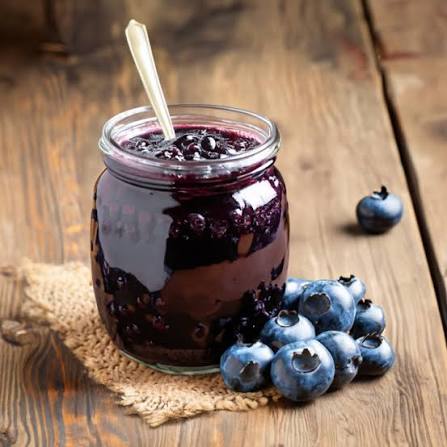
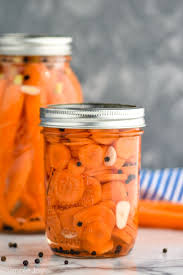
Canned pickled carrots:

Makes about 7 pints

You can use basic beet brine for carrots as well.

2 cps each water, sugar, vinegar and 1 tsp salt.

Ingredients

  • 6 cups white vinegar
  • 2 cups water
  • ½ cup pickling or canning salt
  • 7 cloves of garlic
  • 7 heads of dill or ½ tsp of dill seeds per jar
  • 3 ½ tsp red pepper flakes (optional – I like to make half the jars spicy and the other simply dilled)
  • 5 lbs baby carrots; you may also use regular sized carrots, ends removed, peeled and cut into 2” long sticks

Instructions

  1. In a large stainless steel stock pot, combine vinegar, water and salt. Stir well and bring to a boil, stirring to dissolve the salt. Once salt is dissolved, remove brine from heat and set aside.
  2. Place a half garlic clove in each jar, 1 head of dill or ½ tsp of dill seeds and a ½ tsp of red pepper flakes, if you are using red pepper flakes. Raw pack the carrots into each jar leaving a generous ½-inch head space.
  3. Ladle hot brine into jars being sure to maintain a ½-inch headspace. Remove any air bubbles using your headspace measuring tool or the handle of a wooden spoon. Adjust headspace is necessary and add additional brine if needed, being sure to maintain the 1/2-inch headspace.
  4. Using a warm wash cloth dipped in vinegar, wipe each rim and screw band.  Place lids and rings on each jar and hand tighten.
  5. Place jars in water bather and cover with water.  Process the pint jars for 10 minutes.  Remember, processing time doesn’t begin until the water is at a full rolling boil.

Tip:  If you run out of pickling liquid, use half the parts listed above, boil and fill jars accordingly.  Never fill your remaining jars with just water – it will lessen the acidic level and cause food to spoil.


Canned Sweet Pickled Carrots

How to make Canned Sweet Pickled Carrots recipe, just the right amount of sweet and tangy! These are water bath boiled canned pickled carrots.

Ingredients 

8 1/2 cups peeled garden fresh small carrots

5 1/2 cups white distilled vinegar 5%

1 cup water

2 cups sugar

2 teaspoons canning salt

3 tablespoons pickling spice

4 pint jars

Instructions 

  • Wash and rinse the  pint canning jars. IF you can, keep hot until ready to use. – this can be done by placing them on a baking sheet, placing them in the oven and turning it on the lowest temperature.
  • Prepare the lids and the sealing bands according to the manufacturer’s directions, which should be written on the box or available on the product website.
  • Wash the small carrots well and peel, if desired. I like them both ways.
  • Combine the vinegar, water, sugar and canning salt in a large stockpot. Bring to a boil and boil gently for 3 minutes. ( you don’t want to boil hard and boil off the liquid too much)
  • Add the carrots and bring back to a boil. Then reduce heat to a simmer and heat until the carrots are half-cooked (about 10 minutes). If you want crunchier carrots, boil until the outsides are just soft ( so that they can still absorb the vinegar) and then remove.
  • Divide the pickling spice evenly between the  4 jars, placing it into the bottom. Fill the still warm jars with the hot carrots, leaving 1-inch headspace.  ( that’s one inch from the top) Cover the carrots with the hot pickling liquid, leaving a ½-inch headspace this time around . Remove any air bubbles by poking a knife through the carrots and liquid and adjust the headspace if needed.
  • Wipe the rims of jars with a dampened, clean paper towel and then place the two pieces canning lids on.
  • Process  the jars in a boiling water canner for the following times- feet are above sea level:

0 – 1,000 feet – process for 15 minutes,

1,001 – 6,000 feet process for 20 minutes,

and above 6,000 feet process 25 minutes.

  • Let cool, undisturbed, 12 to 24 hours and then check to make sure that the seals are set ( they will indent and POP loudly)
  • Let the carrots sit for a good 3-5 days before eating but they get better and better the longer they sit!

Notes

I would double or triple this recipe to make a good 8-12 jars if you are really going to make a mess anyways, just make more and store them!

Pickling with pickling seasoning

Making homemade pickles using a pre-made or custom pickling seasoning blend is straightforward and requires a basic brine of vinegar, water, and salt. The primary method is refrigerator pickling (quick pickles), which is simple and doesn’t require a special canning process.

Pint pickle spice and pickle crisp

Use about 1 to 1.5 teaspoons of pickling spice per pint (16-ounce) jar for a balanced flavor, though the ideal amount can vary depending on your taste. For a bolder flavor, you can use up to 2 tablespoons per pint, while some recipes suggest as little as ⅛ teaspoon per pint. You can also experiment by adding spices directly to the jar or simmering them in the brine first for a deeper flavor.

Recommended amounts

  • Standard: 1 to 1.5 teaspoons per pint
  • Bolder flavor: 2 tablespoons per pint
  • Minimum: ⅛ teaspoon per pint (if following certain guidelines)

Tips for using pickling spice

  • Adjust to your taste: Since pickling spice blends differ, start with the lower end of the recommended range and add more if you prefer a stronger flavor.
  • Simmer the brine: For a more infused flavor, you can toast the spices or simmer them in the brine for 1 to 3 minutes before adding to the jars.
  • Use a spice bag: To easily remove the spices, you can put them in a cheesecloth bag or a spice ball before adding them to the brine.
  • Check the recipe: Always follow a specific, tested canning recipe for precise instructions, as it will specify the exact amount and when to add it.


For crisp pickles, use about 1/8 teaspoon of Pickle Crisp granules per pint jar, adding it directly to the jar with your vegetables and hot brine before processing. This small amount of calcium chloride helps maintain crunchiness without the hassle of pickling lime, replacing the need for soaking.

  • Pint Jars: 1/8 teaspoon
  • Quart Jars: 1/4 teaspoon

Tips:

  • Add with Brine: Add the granules to the jar after the hot brine is poured in, just before sealing.
  • Follow Recipe: Always refer to your specific recipe for processing times.
  • Adjust to Taste: You can add slightly more if you prefer, but a little goes a long way.


Quarts:

Ingredients

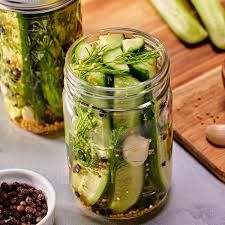
  • Pickling Cucumbers: Approximately 1.5 to 2 lbs of small pickling cucumbers (Kirby or Persian varieties work well), cut into spears or slices.
  • Brine Base:
    • 2 cups white vinegar (must be at least 5% acidity)
    • 2 cups water
    • 2 tablespoons pickling or kosher salt
    • (Optional) 1 tablespoon sugar for a touch of sweetness
  • Flavoring Agents:
    • 2-4 teaspoons pickling seasoning blend (see below for components if making your own)
    • 4-6 sprigs fresh dill or 1-2 teaspoons dill seed
    • 2-4 cloves garlic, peeled and smashed
    • (Optional) Red pepper flakes for a spicy kick

Instructions for Refrigerator Pickles

  1. Prepare Cucumbers and Jars: Wash cucumbers thoroughly. Trim off the blossom end of the cucumber, which contains enzymes that can lead to limp pickles. Cut them into spears or slices as desired. Wash and dry your jars and lids.
  2. Prepare the Brine: I n a medium saucepan, combine the water, vinegar, salt, and optional sugar. Bring the mixture to a boil, stirring until the salt (and sugar) is completely dissolved. Remove the brine from the heat and allow it to cool to at least room temperature to prevent “cooking” the cucumbers.
  3. Pack the Jars: Place your pickling seasoning, garlic, dill, and any optional red pepper flakes at the bottom of the clean jars. Tightly pack the cucumbers into the jars, leaving about a 1/2 inch of headspace from the rim.
  4. Combine and Seal: Pour the cooled brine over the cucumbers, ensuring they are fully submerged and the liquid reaches 1/2 inch below the jar’s rim. Gently tap the jars on the counter to remove any air bubbles.
  5. Refrigerate:Seal the jars tightly with the lids and rings. Place them in the refrigerator. The pickles will be ready to eat in about 24-48 hours for slices, but the peak flavor is typically achieved after one week. They can last for a long time in the refrigerator.

Common Pickling Seasoning Components

A standard pickling seasoning blend typically includes a mix of whole spices:

  • Mustard seeds
  • Coriander seeds
  • Black peppercorns
  • Allspice berries
  • Cloves
  • Bay leaves
  • (Optional) Red pepper flakes or dill seeds

You can buy a pre-made blend at most grocery stores or mix your own based on preference.

Alternative: Traditional Canning (Water Bath Method)

For shelf-stable pickles, you would use the traditional hot water bath canning method. This involves pouring the hot brine over the packed jars and processing the sealed jars in boiling water for a specific duration (typically 10-15 minutes, depending on jar size and altitude) to create a vacuum seal. Always follow tested, safe canning guidelines for this method.


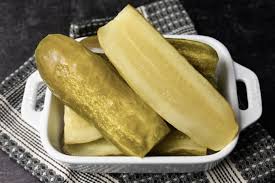
Claussen Pickles Copycat

https://amandascookin.com/homemade-claussen-pickles-copycat/

Servings: 23
Calories: 20
Author: Amanda Davis

Ingredients
20-25 small to medium pickling cucumbers
2 quarts cold water
½ cup white vinegar
⅓ cup canning/pickling salt or coarse Kosher salt
1 teaspoon coriander seed
½ teaspoon mustard seed
¼ teaspoon red pepper flakes
1 tablespoon black peppercorns
1 tablespoon dill seed
¼ teaspoon dried garlic
Fine mesh colander
4- cup measuring cup
pickle crisper optional

Before You Begin

  • A couple of our readers have mentioned using pickle crisper in their mixture which helps prevent the pickles from getting soggy. You can add 1/4 teaspoon of pickle crisper to each quart size jar if desired.

Instructions

  • To make the brine, combine water and vinegar in a large pitcher. Add salt, coriander seed, mustard seed, red pepper flakes and black peppercorns. Stir until salt is dissolved. Set aside.
  • Wash cucumbers in water and trim 1/8-inch off of the blossom end of each one. Slice each cucumber in half lengthwise.
  • Divide the dill seed and dried garlic evenly between two clean quart sized jars. Fill jars with cucumber halves, fitting as many in as you can, they may be snug!
  • Stir brine again to mix ingredients. Place a fine mesh colander over a large bowl or measuring cup. Pour brine through the colander, catching the brine solids in the colander. DO NOT discard!
  • NOTE: You will not be able to fit all the water in this measuring cup or in the two jars. The goal here is to save the brine solids and use them, you will be discarding the left over vinegar and water mixture when finished.
  • Once all the solids have been removed from the brine, distribute them evenly among the jars. Using the brine liquid in the measuring cup, pour into the jars until all the cucumbers are covered.
  • Your brine level should cover your cucumbers and reach the bottom of the jar neck where the twisting begins. The cucumbers will also release some liquid as they brine, so don’t overfill the jar. Discard any remaining brine liquid.
  • Cover lightly with a lid perched on top but DO NOT close and seal. Leave on the counter (out of direct sunlight) for 1 day, then move to the refrigerator for 2-3 more days, or until the cucumbers taste like pickles throughout.
  • Secure lids on jars and refrigerate for up to six months.

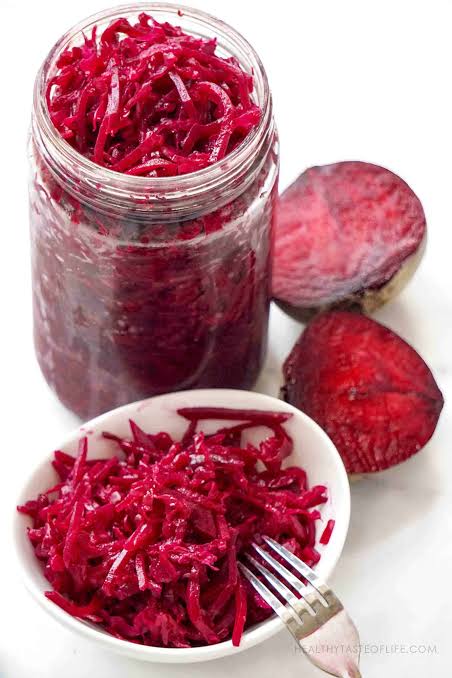
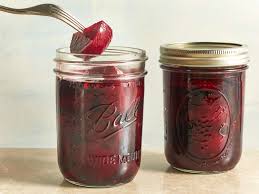
Basic Beet Pickling & canning

Basic Beet Pickling & canning 

Can use this basic brine for carrot’s as well.

https://www.youtube.com/watch?v=vuw97wl18R8

BRINE:

  • 2 cups water
  • 2 cups white vinegar
  • 2 cups sugar
  • 1 teaspoon salt

BEETS:

  • 3 1/2 pounds dark red beets (or any variety you enjoy)
  • 1-2 large yellow or white onions (depending on your preference, the amount of onion can be optional)

CANNING SUPPLIES:

  • 6-7 sterilized pint-size canning jars
  • lids and rings

Start by washing your beets. If you are using homegrown, make sure to leave the root on and cut the leaves to within an inch of the beet. Place in a large kettle and cover with water. Bring to a boil and let cook until tender. You’ll know they’re ready when a knife is easily inserted with just slight resistance. Since beets vary in size, they may take varying times to cook. Remove them individually as needed. When cooked, drain (remove from water), let cool, and remove skins using a knife and gloves to prevent staining. At this point, combine all the brine ingredients and let it simmer on the stove. Also start a large kettle filled with water on high heat, fitted with a rack in the bottom. This will be used for a water-bath.

Using sterilized jars, slice onion to taste and place in each jar. Then fill with sliced beets; I slice directly into the jars. If this is difficult, slice on a cutting board and pack jars. Top sliced beets with additional onion, leaving about a half-inch of headspace in the jar.

Bring brine to a hard boil and fill each jar with the brine, leaving a half-inch of headspace.

Clean the top of the jars with hot water or vinegar and a paper towel, to remove any debris and drips.

Following the manufacturer’s directions, place lids and rings on jars being careful not to over tighten (this can cause lids to buckle).

Place prepared jars in boiling water bath, making sure water covers jars by at least one inch. Bring back to a boil and process for 30 minutes. Remove jars from kettle using a jar lifter and let cool completely before touching. Cover with a dish towel so they cool slowly and without any drafts.

Soon you will be hearing the music to a canner’s ears – the ping of the lids sealing! If one does not seal, don’t worry. Just place it in the refrigerator and eat it! These are delicious after only a week of sitting in the brine. However, the sealed jars will last at least a year in a cool, dark environment.

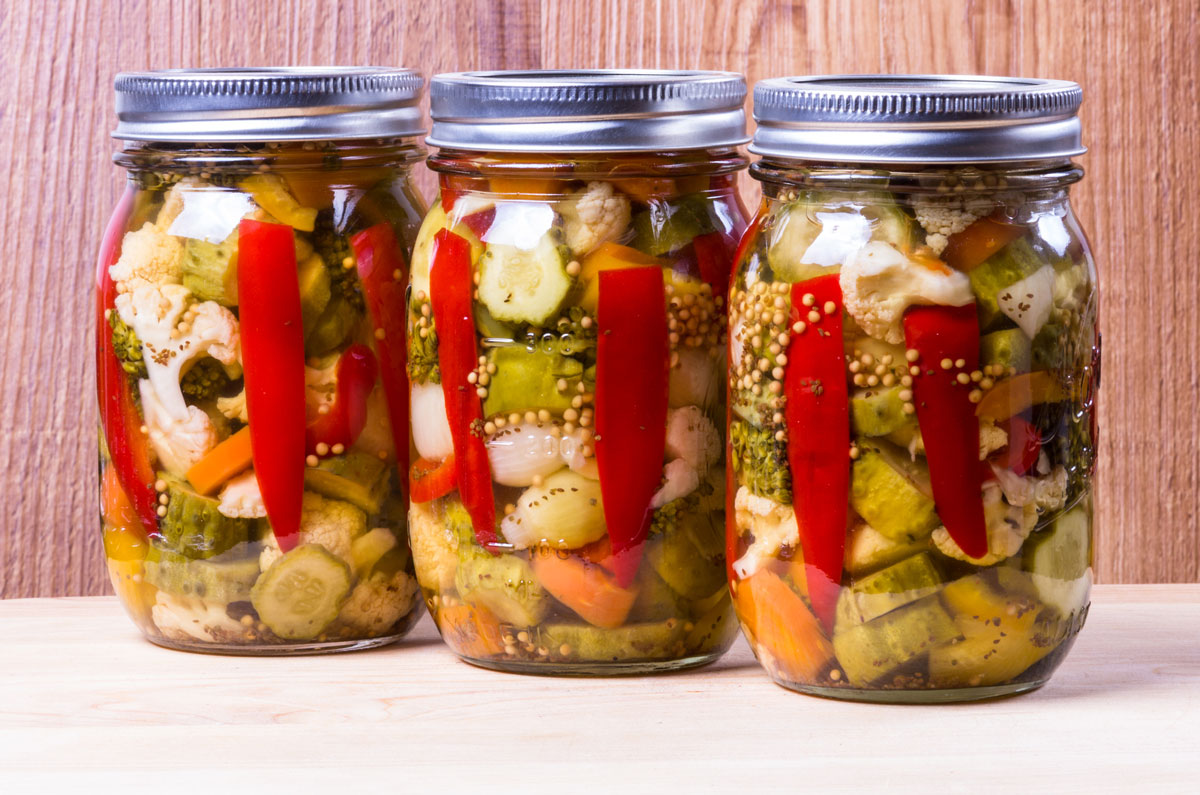
Quick Pickled Garden Veggies (Jess)

Try folding up a clean grape leaf on top of each jar for crispiness.

Ingredients

  • 1 1/2 cups carrots sliced
  • 1 1/2 cups jalapenos sliced
  • 1 1/2 cups cauliflower cut in 3/4 inch pieces
  • 1/4 large onion sliced
  • 1 Tablespoon salt plus 1 1/2 teaspoons salt
  • 1 cup water
  • 1 cup white vinegar rice or apple cider work as well
  • 1 Tablespoon sugar plus 1 1/2 teaspoons sugar
  • (This can be adjusted if you don’t need  or have so many vegetables, just half the amts. To fit your needs)
  • 2 cloves garlic minced or thinly sliced
  • 1 bay leaf per jar of pickles
  • 3/4 teaspoon dried thyme or 1 Tablespoon fresh thyme
  • 1/2 teaspoon dried marjoram or 1/2 Tablespoon fresh marjoram
  • 3/4 teaspoon allspice ground, or 8 whole allspice

Instructions

  1. Prep your vegetables by washing and cutting them into bite-sized pieces. Toss them with salt and sugar and let them rest for 30 minutes.
  2. In a 2-quart saucepan, combine 1 cup of water with the vinegar, bay leaf, garlic, marjoram, thyme, and allspice and bring to a boil over high heat.
  3. Add your vegetables to your canning jar and pour the vinegar water brine mixture over the top.
  4. Add a canning lid and ring and allow to cool to room temperature.
  5. Move to the refrigerator once your vegetables are cooled.
  6. Your quick-pickled vegetables can be eaten right away, but they are best after sitting for about 24 hours.
  7. Pickled vegetables can be stored in the refrigerator for 2-4 weeks.

Notes

  • Pro-Tip: Let your brine cool slightly before moving on. Pouring boiling brine into a cool canning jar may crack your jar, and will cook your vegetables slightly making them less crunchy.
  • Pickled vegetables can be stored in the refrigerator for 2-4 weeks.

Nutrition

Serving: 0.25cup | Calories: 21kcal | Carbohydrates: 4g | Protein: 1g | Fat: 1g | Saturated Fat: 1g | Polyunsaturated Fat: 1g | Monounsaturated Fat: 1g | Sodium: 450mg | Potassium: 119mg | Fiber: 1g | Sugar: 2g | Vitamin A: 2142IU | Vitamin C: 26mg | Calcium: 13mg | Iron: 1mg


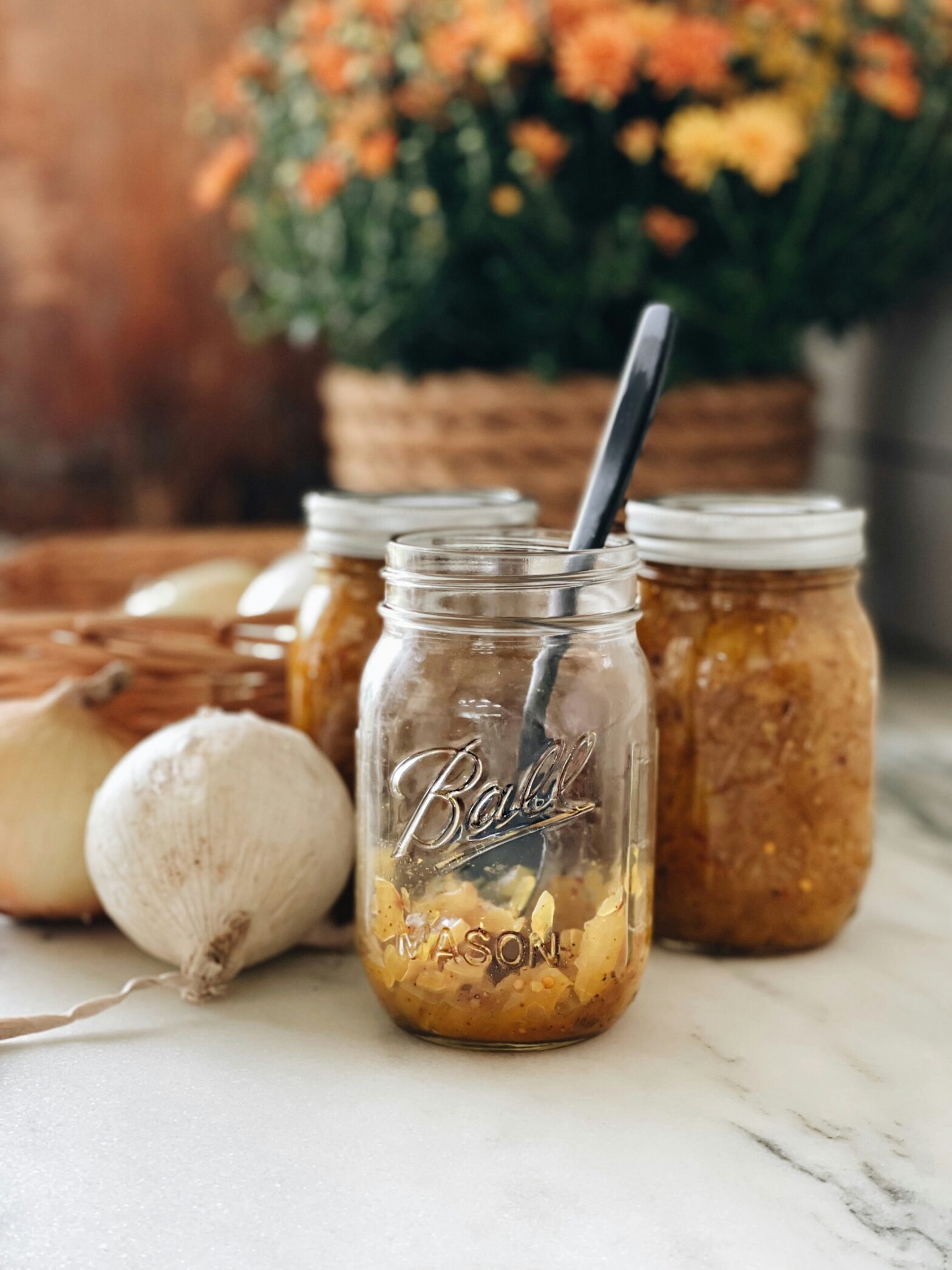
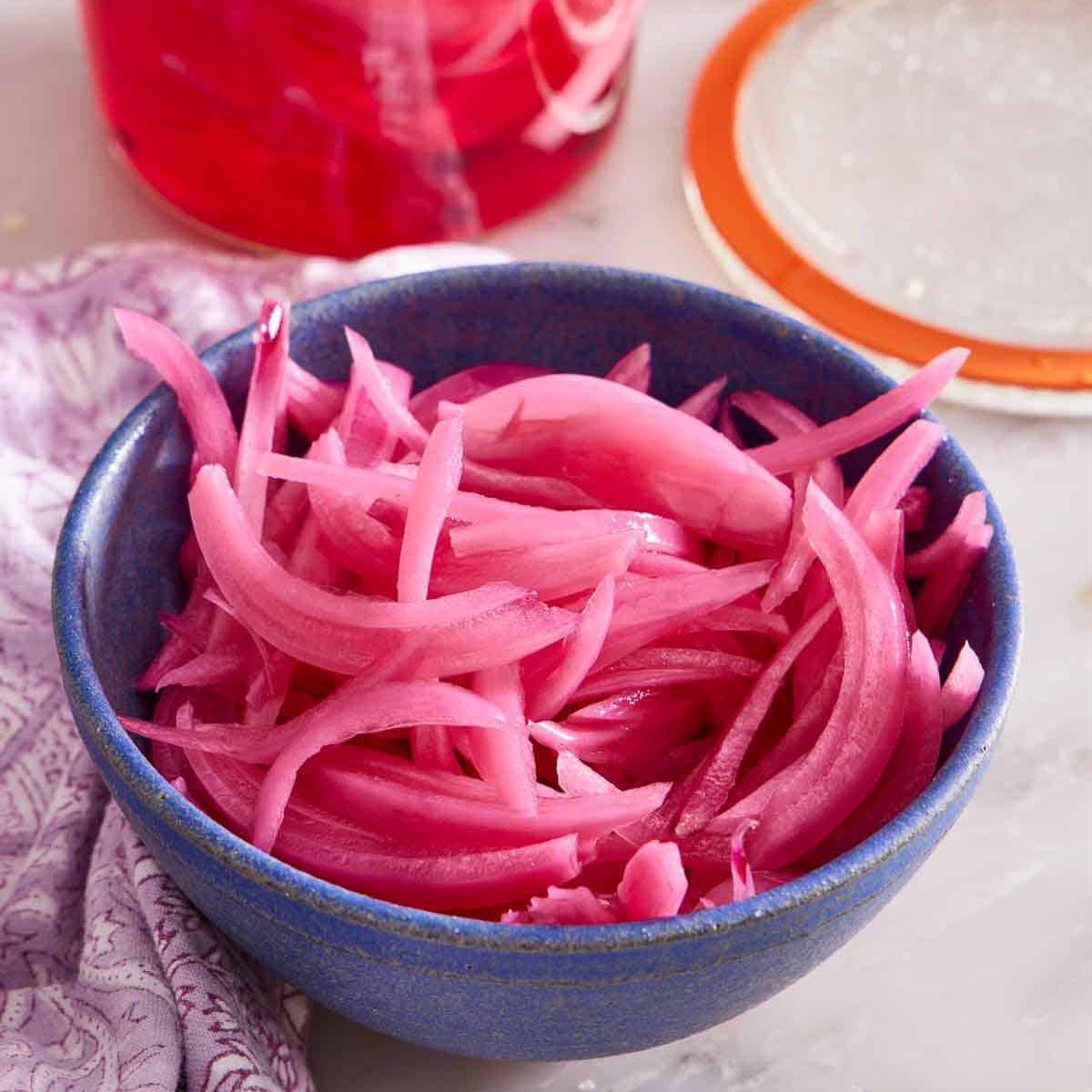
Refrigerated Pickled Red Onions

Servings servings
 Calories 6cal
 AuthorJohn Kanell

Ingredients

For the Pickled Onions:

Optional Seasonings:

1 garlic clove peeled and smashed
½ teaspoon whole black peppercorns
1 bay leaf

Instructions

Thinly slice the red onion into circles or thin slices. Place in a quart-sized glass mason jar (or divide amongst two pint-sized jars).
In a small saucepan, combine the sugar, salt, vinegar, and 1 cup water. Bring to a simmer over medium-high heat, stirring frequently to dissolve the salt and sugar. If using any optional seasonings, stir them in.
Pour over the onions and let cool to room temperature for about 1 hour. You can use the onions immediately or cover and refrigerate for up to 1 week. (They have the best flavor if they sit overnight, but you can also use them immediately after they cool.)

Notes

Check the onions before you start. You want to make sure your onions do not have any soft spots, mold, or mildew. Sometimes, when onions are stored for a long time, they can develop mildew in the layers of the skin. Check the onion before and after peeling it.

Add citrus. You can replace up to ¼ cup of the vinegar with fresh lime or lemon juice or add a strip or two of citrus zest to the jar.

  • Customize this pickled onion recipe to your taste using pickling spices and/or cumin, fennel, or mustard seeds. I like to insert a sprig of fresh herbs like thyme, rosemary, or dill. You can also add a small dried chili or a dash of red pepper flakes for heat.
  • Use a different sweetener: Feel free to use maple syrup or honey instead of granulated sugar.

Nutrition

Calories: 6kcal | Carbohydrates: 1g | Protein: 0.1g | Fat: 0.01g | Saturated Fat: 0.003g | Polyunsaturated Fat: 0.002g | Monounsaturated Fat: 0.001g | Sodium: 194mg | Potassium: 9mg | Fiber: 0.1g | Sugar: 1g | Vitamin A: 1IU | Vitamin C: 0.4mg | Calcium: 2mg | Iron: 0.03mg

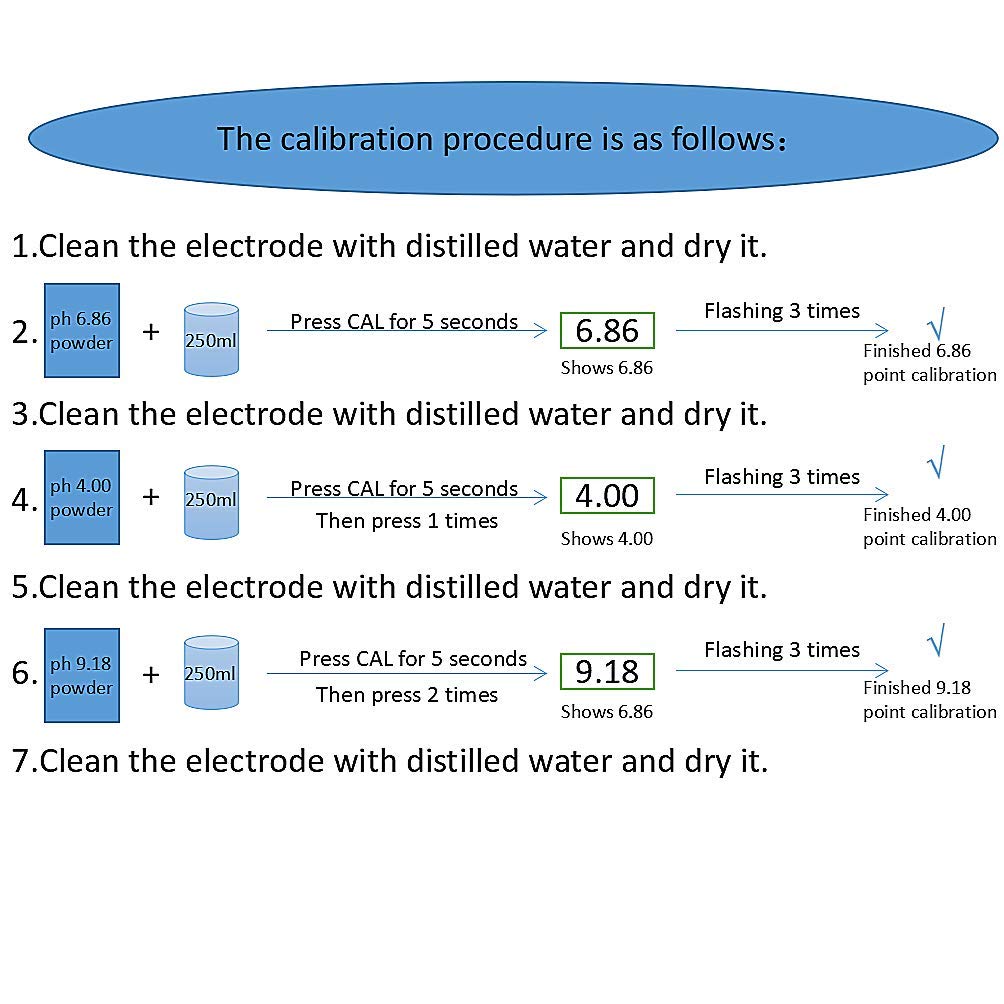
Calabrate ph tester

Calabrate ph tester

HOW TO STORE THE PH SOLUTIONS LONG TERM (re-use in the future):
1. Place each solution in a clean jar and store out of sunlight (i.e. cupboard or pantry).
2. Label the jar with the correct PH value of the solution
3. The solution will keep for about 8 months before a weird slime begins to develop. Maybe this will never happen, maybe it will happen sooner. None the less, this is how I store mine and they last 8-12 months before it’s time to dump them.
4. Recalibrate the meter, or check in on it’s accuracy using the stored solutions anytime.

How To Save Your Thawed Freezer Meat in power outage

Amish Canning


Emergency Water Bath Meat


Canning meat with water bath method
Use this meat for soups or stews that you will be boiling or simmering before eating. Boil 10 min.

https://www.youtube.com/watch?v=3u721gZmHxU

½ tsp – if using season-all or 1/2 Tb salt per qt.
½ tsp season all or other seasoning per qt
¼ cup water
Pack meat down and leave 1” head space
Wipe top of jar with vinegar
Finger tight  lid

Cover jars with water and bring to hard boil –start timer and keep at hard boil for 3 hrs. if water level falls replace with boiling water. At least 212 degrees needs to be reached.

Tips:

Boil, water bath and even pressure can or regular can food 10-20 min.
Always use a rack or towel at bottom.
Timing starts with rolling boil.
Meats must be thawed before canning.
Lids are finger tight only.
Water over the lid, for sure for meat. 1 inch of water for meat may not be enough moister in meat.
½ Tb salt to meat, and maybe a ½ Tb of vintage to veg.
Pre-cook chunks of meat with gravy and pack hot.


Water Bath Canning

Foods that are high in acid and have a pH of 4.6 or lower can be safely canned using a water bath canner, including:
Fruits: Most fruits, including apples, apricots, berries, cherries, cranberries, peaches, pears, plums, and rhubarb
Fruit juices: Fruit juices from high-acid fruits
Jams and jellies: Jams, jellies, and marmalades
Pickles: Pickles and pickled beets
Salsas: Salsas made with vinegar, lemon juice, or lime juice
Tomatoes: Most tomatoes, but some may need to be acidified with lemon juice, vinegar, or citric acid to reach a pH of 4.6 or lower
Foods that are not safe for canning: include butter, milk, cheese, cream, yogurt, eggs, tofu, soy, and any recipes that use these ingredients.

The Water Bath Canning Process—You Can Do It!
1. Fill water bath canner at least half-full with water. Cover and maintain a simmer (180°F) until canning jars are filled and placed in canner.
2. Check canning lids, jars, and bands for proper functioning. Jars with nicks, cracks, uneven rims, or sharp edges may prevent mason jar sealing or cause jar breakage. The underside of lids should not have scratches or uneven or incomplete sealing compound as this may prevent sealing. Bands should fit on all jars for canning. Wash all in hot, soapy water and dry well.
3. Preheat your Ball® canning jars in hot (180°F) water. Keeping jars hot prevents them from breaking when filled with hot food. Leave lids and bands at room temperature for easy handling (see tip at bottom).
TIP: It is not necessary to purchase special cookware for water bath canning. A large, deep saucepot equipped with a lid and a rack works well. As long as it is large enough to fully immerse the jars in canning water by 1-2 inches—and allow the water to boil rapidly when covered—the pot is adequate. If you don’t have a rack designed for home preserving, use a cake cooling rack or extra bands tied together to cover the bottom of the pot.
4. Prepare the desired tested high-acid, preserving canning recipe. Browse our online recipe collection, The Ball Blue Book, or one of our other recipe books for ideas!
TIP: For the simplest recipes, use Ball® Food Products (recipes are included on packaging)!
Pickle mixes: Special spice blends for crunchier pickles. Available in Bread & Butter and Kosher Dill varieties.
Fiesta Salsa Mix: Add tomatoes and make it mild, medium, or hot.
RealFruit Pectins: For making homemade jams and jellies. Available in Classic, Liquid, Low or No-Sugar Needed and Instant No-Cook varieties.
5. Use a Jar Lifter to remove the pre-heated jar. Fill canning jar one at a time with prepared food using a Jar Funnel, leaving headspace recommended in recipe. Remove air bubbles, if stated in the recipe, by sliding the Bubble Remover & Headspace Tool or rubber spatula between the jar and food to release trapped air. Repeat around jar 2-3 times. For successful sealing, you need to leave the correct amount of space between the food and the rim of the jar.
6. Wipe the rim and threads of the jar using a clean, damp cloth to remove any food residue. Center lid on the jar, allowing sealing compound to contact the jar rim. Apply band and adjust until fit is fingertip-tight. Place jar in canner. Repeat steps 4 and 5 until all jars are filled. Ensure water covers jars by 1-2 inches.
7. Place lid on water bath canner and bring water to a rolling boil. Begin processing time.
8. Process in the boiling water for the time indicated in tested preserving recipe. When complete, shut off heat and remove the lid. Allow jars to rest in canner for 5 minutes to be acclimated to the outside temperature.
9. Move jars from canner and set upright on a towel. This will prevent jar breakage that can occur from temperature differences. Leave jars undisturbed for 12 to 24 hours. DO NOT tighten bands as this may interfere with the jar sealing process.
10. Inspect lids for seals. There should be no flex when center is pressed. Remove the bands and attempt to lift lids off with your fingertips. Properly sealed lids will remain attached. If a lid fails to seal within 24 hours, immediately refrigerate the product. Clean canning jars and lids, label and store in a cool, dry, dark place for up to for up 18 months when using SureTight Lids according to our instructions for Food Preservation.
TIP: Preheating Ball® lids is not advised. The sealing compound used for our home canning lids performs better at room temperature than it does pre-heated in simmering water (180°F). Simply wash lids in hot, soapy water, dry, and set aside until needed. Preheating can lead to less vacuum being achieved during water bath canning, and to buckle failures during pressure canning.

Easy Refrigerator Pickles Recipe

YELD:24 servings
Ingredients
6 cups thinly sliced cucumbers
2 cups thinly sliced onions
1-1/2 cups sugar
1-1/2 cups cider vinegar
1/2 teaspoon salt
1/2 teaspoon mustard seed
1/2 teaspoon celery seed
1/2 teaspoon ground turmeric
1/2 teaspoon ground cloves
Directions
1. Place cucumbers and onions in a large bowl; set aside. Combine remaining ingredients in a saucepan; bring to a boil. Cook and stir just until the sugar is dissolved. Pour over cucumber mixture; cool. Cover tightly and refrigerate for at least 24 hours before serving. Yield: 6 cups.
Nutritional Facts
1/4 cup equals 58 calories, trace fat (trace saturated fat), 0 cholesterol, 50 mg sodium, 15 g carbohydrate, trace fiber, trace protein.
© 2016 RDA Enthusiast Brands, LLC