
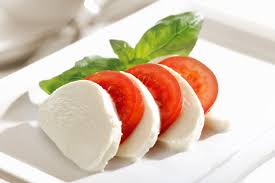
Yield 1 Pound
Ingredients
1 Gallon of Milk (not ultra-pasteurized)
1/4 Rennet Tablet or 1/4 tsp Single Strength Liquid Rennet
1.5 tsp Citric Acid
1 tsp Cheese Salt (adjust to taste)
Instructions
Choosing the Right Milk: Make sure the milk you use is not ultra pasteurized.
You can use homogenized or non-homogenized milk. Low fat milk will work, but the cheese will be drier and less favorful.
1 Prepare Work Area
Do not prepare any other food while you are making cheese. Put all food products
away.
Move all sponges, cloths and dirty towels away from your work surface, wipe your sink
and stove with soap and water. Finally use your antibacterial cleaner to wipe down all
surfaces.
2 Prepare Rennet
Crush 1/4 tablet of rennet and dissolve in 1/4 cup of cool non-chlorinated water, or add
1/4 tsp single strength liquid rennet to the water. Set your rennet mixture aside to use
later.
3 Mix Citric Acid & Milk
Add 1 1/2 tsp. of citric acid to 1 cup cool water, pour this into your pot.
Now, pour cold milk into your pot quickly, to mix well with the citric acid. This will bring
the milk to the proper acidity to stretch well later.
4 Heat Milk
Heat the milk slowly to 90°F. As you approach 90°F, you may notice your milk beginning
to curdle slightly due to acidity and temp.
Note: If you’re having problems with milk forming a proper curd, you may need to
increase this temp to 95°F or even 100F.
Fill a pot with water and begin heating it to 175°F (if heating curds without a microwave
in step 8).
5 Add Rennet
At 90°F, remove the pot from the burner and slowly add your rennet (which you
prepared in step one) to the milk. Stir in a top to bottom motion for approx. 30 seconds,
then stop.
Cover the pot and leave undisturbed for 5 minutes.
Check the curd after 5 minutes, it should look like custard, with a clear separation
between the curds and whey. If the curd is too soft or the whey is milky, let it set longer,
up to 30 more minutes.
6 Cut & Cook Curd
Cut the curds into a 1″ checkerboard pattern.
Place the pot back on the stove and heat to 105°F while slowly stirring the curds with
your ladle (if you will be stretching the curds in a hot water bath, rather than using a
microwave, heat to 110°F in this step).
Take the pot on the burner and continue stirring slowly for 2-5 minutes. (More time will
make a firmer cheese).
7 Transfer & Drain Curd
Follow Option A or B below
Option A: Heating with Water Bath
With a slotted spoon, scoop curd, from the pot, into a colander. Allow the whey to drain
into another bowl.
When done transferring the curd to the colander, pour whey back into the pot. Rest the
colander with curd in the pot of whey, to keep the curd warm.
Add a little salt to taste, about 1/4-1/2 tsp. The salt will work into the cheese in the
following steps. You can fold the curd over on itself as it drains to increase the amount
of whey running o.
The more you work the curd at this point the drier the Mozzarella will be.
Option B: Heating with Microwave
With a slotted spoon, scoop curds into a colander or microwave safe bowl (if the curd is
too soft at this point, let it sit for another minute or so).
Once transferred, press the curd gently with your hand, pouring o as much whey as
possible. If desired, you can reserve the whey to use later in baking or as a soup stock.
8 Heat Curd & Remove Whey
Follow Option A or B below
Option A: Heating with Water Bath
Begin by pouring some of the hot water, that has been simmering on the stove, into
another bowl, adjust the temperature to about 175F. This will be too hot for your hands
so have thick rubber gloves or use a spoon to work curd in the hot water.
Cut or break the curd into 1-2 inch pieces and begin placing them into the hot water.
Work the curd quickly by pressing them together and folding over in the hot water to
facilitate even heating.
Option B: Heating with Microwave
If in a colander, transfer the curds into a heat safe bowl. Next, microwave the curd for 1
minute.
If desired, add 1/4-1/2 tsp of salt to the curds for added avor.
You will notice more whey separation from the curd. Drain o all whey as you did
before. Quickly work the cheese with a spoon or your hands until it is cool enough to
touch (rubber gloves will help since the cheese is almost too hot to touch at this point).
Microwave two more times for 35 seconds each, and repeat the kneading as in the last
step to aid in more whey drain o and ensure even heating of the curds. Drain o all of
the whey as you go.
9 Knead & Stretch Curd
Follow Option A or B below
Option A: Heating with Water Bath
As the curd begins to meld together pull it from the hot water and begin stretching it. If
the curd does not stretch check and adjust your water temperature and re-submerge
the curd.
At first it may be lumpy but as the curd stretches, it will become smooth. Stretch it out
several times and fold it back on itself. If it begins to cool, you will notice it tear, place it
back in the hot water to re-heat.
When it forms a consolidated mass, stretches like tay and develops a sheen it can be
formed into a ball for the nal cheese.
Option B: Heating with Microwave
Now the fun begins, knead quickly now as you would bread dough. Remove curd from
bowl and continue kneading until it is smooth and shiny. Return it to the microwave if
needed (if it begins to cool before it’s ready to stretch). Add salt near the finish. At this
point, if hot enough, the cheese should be soft and pliable enough to stretch, and
stretch, and stretch some more. This is what makes it Mozzarella
When it forms a consolidated mass, stretches and develops a sheen it can be
formed into a ball for the final cheese.
10 Eat & Enjoy
The Mozzarella is now finished and ready to enjoy.
To chill the mozzarella and help maintain its shape place it in a brine solution of 2-3 tbs
of salt, 2-3 tbs of clear whey and 1 quart of very cold water.
Once cooled it can be wrapped and stored in the fridge where it will last for several
days, although it’s always best when eaten fresh.