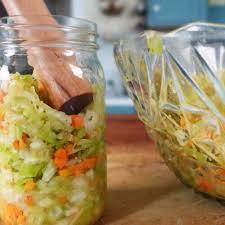
Don’t forget to save a couple leaves for top after second layer removed.
INGREDIENTS:
• 2.2 lbs green or purple cabbage (shred) (I use 1 head)
• 1 or (3/4 Tablespoon sea salt for 2-4 lbs cabbage) heaping tablespoon sea salt, kosher salt, Himalayan salt (not iodized table salt)
• 1-2 carrot (optional)
• 1-2 teaspoons caraway seeds (optional)
• additional fresh or dried herbs like caraway, ginger root, fennel or dill (optional)
Let set 20 to 30 min. then massage and press into jars.
2 weeks or more to ferment.
Ck ph before tasting
PH should be below 4.1 at least.
The ideal pH for a safe and well-preserved sauerkraut fermentation is at or below 4.6, though a lower pH of around 3.5 to 4.1 is even better for inhibiting harmful microbes and achieving the best flavor. This acidic environment is created by lactic acid bacteria as they consume cabbage sugars during fermentation, resulting in a tangy, safe product.
Why pH is Important
Safety:
A pH of 4.6 or lower prevents the growth of pathogenic bacteria, such as those causing botulism, which need a more neutral environment to multiply.
Flavor:
The lactic acid produced lowers the pH, contributing to the characteristic tangy flavor of sauerkraut.
Preservation:
The acidic environment acts as a natural preservative, making the sauerkraut safe to eat and store.
Achieving the Correct pH
Initial pH: The process begins with a relatively neutral pH, which gradually drops as lactic acid bacteria become active.
Lactic Acid Bacteria (LAB): These beneficial bacteria consume sugars in the cabbage to produce lactic acid, lowering the pH.
Fermentation Time:
Fermenting for at least 7 days allows the pH to fall to a safe level. Fermenting longer can lead to a lower, safer pH of 4.1 or below, which further enhances preservation.
Sauerkraut