
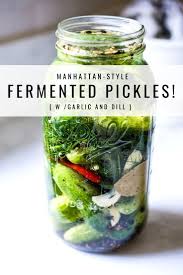
Small cucumbers make crispier pickles – LESS WATER CONTENT IS BEST.
https://www.youtube.com/watch?v=GX6PPYRPPa0
Place 2-3 Grape leaves on top of pickles to help make pickles crispier because of the tannins.
Hot Soapy water and rinse well is all you need for jars.
Basics:
Brine: Sea Salt (no caking agent)
Distilled Water
2 Tb Salt to 1 Qt Water
Cut off Blossom end and quarter Cucumbers
- Pickle Seasoning: 1 to 2 tablespoons of a pre-mixed pickling spice blend per quart jar.
- Optional Add-ins for Crunch: 1-2 grape leaves, oak leaves, bay leaves for crunch, or a pinch of black tea leaves can add tannins to help keep pickles crisp.
- Other Flavorings: Fresh garlic cloves and dill sprigs are common additions.
Pack spears tight
If you have dill flowers use it liberally.
Cover with brine
Add a few grape leaves, weight so pickles stay under liquid.
7-8 days to ferment
PH Below 4.5
Refrig after ready
Kham Yeast
Yeast is a harmless white layer of mold. Lift carefully and discard. A small amount of black mold (not harmless) can be carefully scraped off, then flush with a new brine (see video.)
https://cleanfoodliving.net/fermented-pickles/
Recipe:
Cucumbers (enough to fill the jar) (Small pickling cucumbers are best)
1¼ tsp Coriander Seeds (whole)
5-10 Cloves
2 cloves Garlic (sliced)
handful Dill Flowers or Fresh Dill Weed (sub with dill seeds if you don’t have fresh dill available.)NOTE: If using dill seeds instead of fresh, add all the seeds to the bottom of the jar.
5 Bay Leaves
1 tbsp Fine Salt (use a salt that not contain anti-caking agents.)
1 quart distilled water
Brine Note
In the video I use a 4.25% brine. However the saltwater brine concentration in this recipe has been reduced to a 3% due to popular request. Use a salt that does not contain anti-caking agents since they can cause a fermentation to fail.
Brine Instructions
Combine the salt & water and mix thoroughly. Set aside for later use.
Jar Instructions
Wash the jar(s) being used in hot soapy water. Sterilization is not required.
Cucumber Notes
Official pickling cucumbers work best, however any variety can be used.
If the cucumbers have dirt on them then lightly rinse it off. If they are not dirty, do not rinse. The beneficial bacteria needed for the fermentation to take place are naturally present on the surface of the vegetable skin. If washed with produce soap or power rinsed, those good bacteria will go down the drain. Garden or farmer’s market cucumbers work best. Store bought cucumbers, even organic, are power washed before they are placed on the store shelf. Since most (if not all) of the beneficial bacteria have been washed away, most likely the fermentation will fail.
Garden or famer’s market cucs have not been washed which is why they will successfully ferment.
TIP: If buying the cucumbers from a farmer’s market, ask the farmer if they have been washed beforehand. 99% of the time they say no, but it doesn’t hurt to confirm!
Ingredient Instructions
Add the coriander seeds, cloves, some of the fresh dill and garlic slices to the bottom of the jar.
Fill the vessel tightly with the cucumbers whether they be in the form of slices, spears or whole. (Whole cucumbers will retain their firmness better than slices or spears)
Add the bay leaves, garlic slices and some more dill between the cucumbers as you load the vessel.
TIP: The bay leaves contain tannins which help retain the firmness of the cucumber during fermentation. Add more bay leaves for more tannins if you desire. The taste of the fermented pickle will not be adversely affected.
Top off the jar with any remaining dill, but leave a 2-3 inch (5cm) headspace so that there is room for the weight.
Add the fermenting weight.
Even though the cucumbers seem tightly packed in the jar for now, come days 2 and 3 they will begin to loosen and float up. Therefore, it is imperative to use a fermentation weight. Don’t skip it!
Pour the brine over the cucumbers and weight until everything is fully submerged beneath the brine. The brine will protect the food from mold and other bad pathogens.
Place a loose lid on the jar. If the lid is kept loose, the fermentation gasses will be able to escape without needing to burp the jar.
Leave on the counter out of direct sunlight for 5 to 8 days for the fermentation period.
TIP: A longer fermentation period will contribute to the cucumber’s loss of firmness which is why I don’t recommend longer than 8 days.
Feel free to taste test the cucumbers daily beginning on day 5 of the fermentation period. End the fermentation when their texture & flavor taste good to you. This can be on day 5, 6, 7 or 8.
End The Fermentation
Once the fermentation period is over, with clean hands take out the fermenting weight.
Remove any kahm yeast that may have developed. Watch the video to see how to do this because I provide a visual demonstration.
Note: Although kahm yeast is unattractive atop a fermentation, it is harmless.
Storage
For long term storage, there is no need to return the weight to the jar. Secure the lid on the jar tightly and keep the pickles in the refrigerator where they will last for many months.
NOTE: Fermentations require cold storage to last long term. In the olden days root cellars were used, but most people do not have these in modern times. That is why a refrigerator is needed.
If making a quantity larger than a quart/liter jar, see instructions below on how to adjust the ingredient measurements.
Tannins help fermenting cucumbers remain firm. Tannins can be found naturally present in bay leaves, grape leaves, oak leaves and black & green tea. I have found 5+ bay leaves or 4-5 grape leaves per quart/liter to be quite effective. Black & green tea changes the flavor of the pickles and in my opinion, does not work as well as the bay & grape leaves. I have not personally experimented with oak leaves, but have heard some people swear by them.