
Homestead Wife Life · Clarified Butter & Ghee
Two foundational methods from the Homestead Wife Life kitchen. Both begin the same way — the difference is how far you take it.
Clarified Butter (1 lb)
Ingredients: 1 lb (454 g) unsalted butter
Method: Place the butter in a heavy saucepan over low heat.
Allow it to melt slowly without stirring. As the butter melts, foam
will rise to the surface while milk solids sink to the bottom. Skim
off the foam with a spoon. When bubbling subsides and the
butterfat appears clear and golden, remove the pan from the
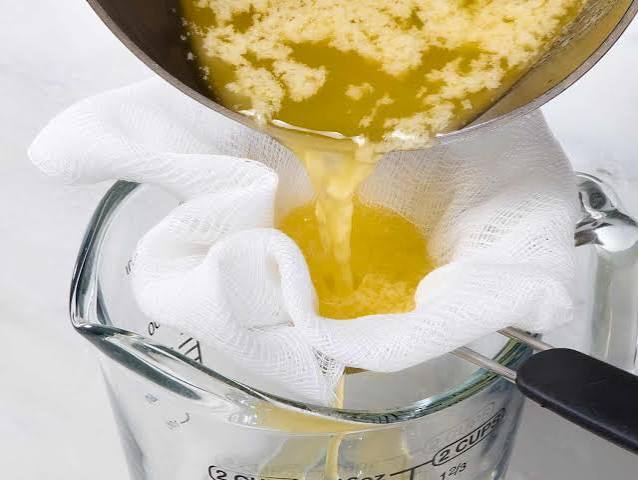
heat. Carefully pour the clear butterfat through a fine mesh
strainer or cheesecloth into a clean jar, leaving the milk solids
behind.
What to look for: Pale golden color · Clean buttery aroma · No
browning or nutty scent
Storage: Room temp (cool): up to 1 week · Fridge: several
months · Freezer: up to 1 year
Ghee (1 lb)
Ingredients: 1 lb (454 g) unsalted butter
Method: Begin exactly as for clarified butter, melting the butter
slowly over low heat and skimming off the foam. Once bubbling
slows, continue cooking without stirring. Watch the milk solids
on the bottom of the pan as they shift from pale to golden. When
the butterfat deepens in color and smells warm and nutty,
remove the pan from the heat immediately. Strain the ghee
through a fine mesh strainer or cheesecloth into a clean jar,
leaving all solids behind.
What to look for: Deep golden color · Toasted nutty aroma ·
Solids golden (not dark brown)
Storage: Room temp: several months · Fridge: up to 1 year ·
Freezer: up to 2 years
Notes from My Kitchen
• Clarified butter and ghee start the same way — the difference is patience at the end. • If the milk solids darken too much, ghee can taste
bitter; when in doubt, stop early. • Always use clean, dry jars and utensils to maximize shelf life. • I keep ghee on hand for flatbreads,
sautéing, and spice blooming.
- Trapped Air: Pouring the hot liquid ghee through a strainer incorporates a little air, which gets trapped as the fat begins to cool and thicken.
- Evaporation: Even after straining, tiny amounts of residual moisture can cause gentle bubbling or a foamy layer at the top as the ghee sets.
- Spoiled Ghee: You should only be concerned if the bubbles are active, moving, expanding, or fizzing upwards. If the ghee smells rancid, sour, or has foamy spots, it has gone bad.